
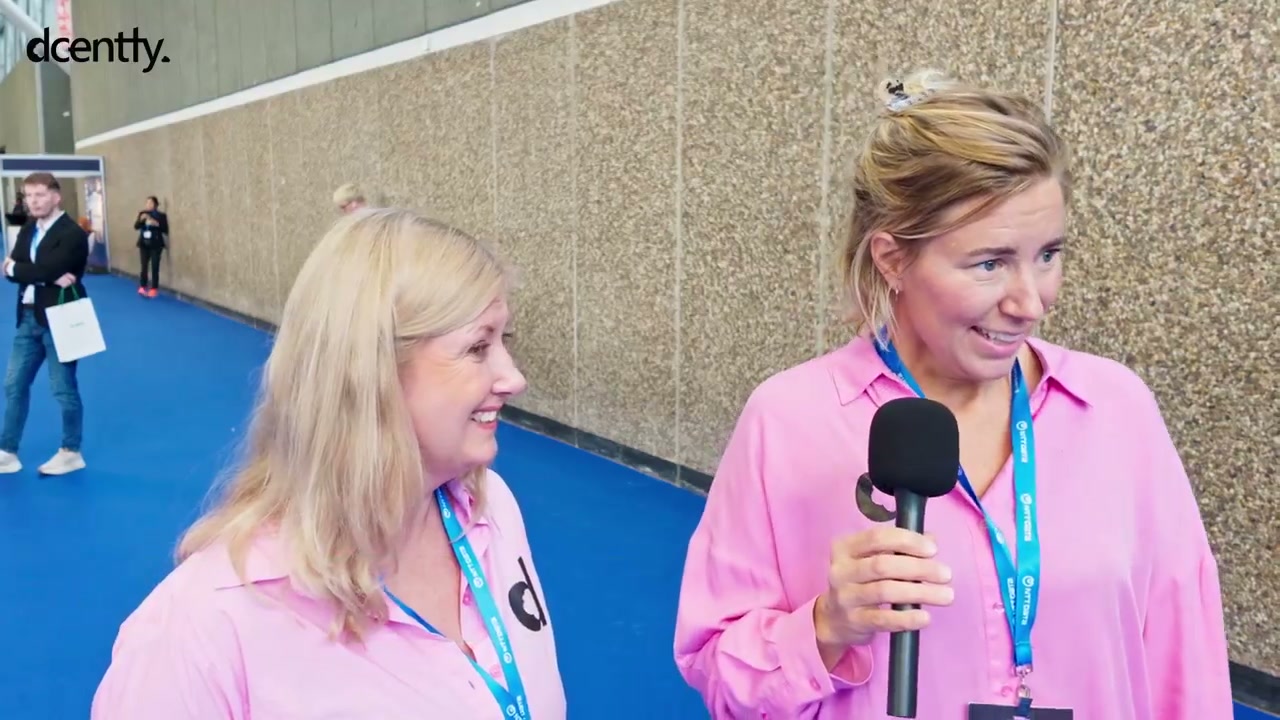
Video interview · Data Centre Solutions
Can't see the video? Watch it on LinkedInThe question isn't just how we build. It's why, where and for whom.
Europe needs more digital infrastructure. AI, cloud services and an increasingly digital society are driving demand for computing capacity, electricity, water and land.
But alongside the industry's expansion, another development is becoming increasingly difficult to ignore: growing public opposition to new data centre developments.
For the industry, this is often discussed as a permitting challenge or a barrier to growth. At dcently, we believe it also presents an opportunity to ask some important questions.
What makes a data centre a good neighbour? What should communities reasonably expect in return for the resources and infrastructure they provide? And who should get to define what responsible growth actually means?
These were some of the questions we discussed with Data Centre Solutions at TechEx Europe in Amsterdam.
From efficient facilities to valuable infrastructure
For many years, the data centre industry's sustainability efforts have focused heavily on operational efficiency. And for good reason. Improvements in energy efficiency, cooling technologies and resource management are important achievements.
But efficiency alone cannot tell us whether a data centre is sustainable in its broader context.
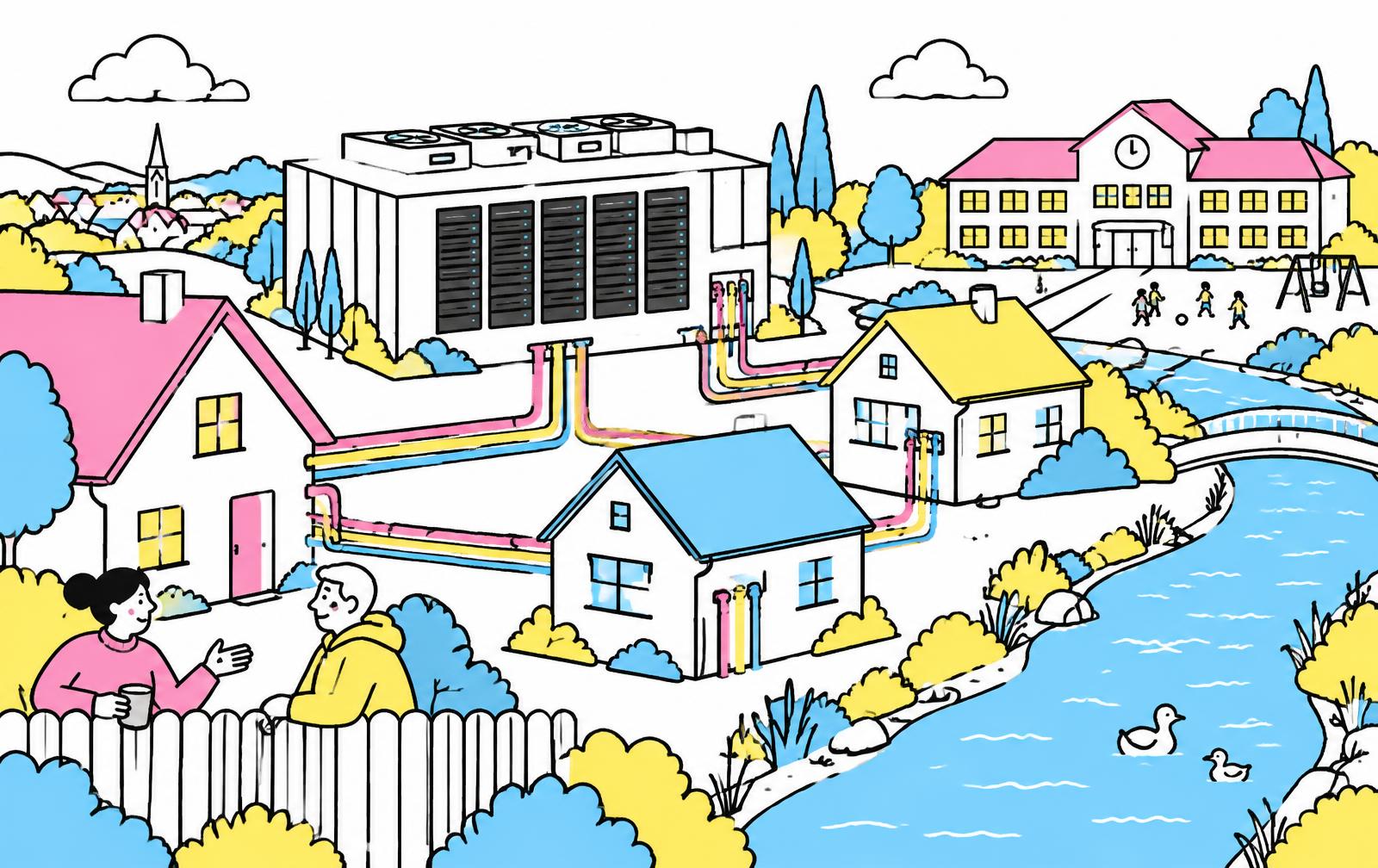
A facility might achieve excellent energy efficiency while placing significant pressure on a constrained local electricity grid. Another might recover large amounts of excess heat, but lack the infrastructure or partnerships needed to make that heat useful.
Water consumption needs to be understood in relation to local water availability. Land use needs to be considered alongside community priorities. And economic contributions need to be evaluated beyond the construction phase.
The question is no longer only how efficiently a data centre operates, but how effectively it contributes to the system around it.
That requires a broader perspective on sustainability — one that considers environmental, social and governance factors across the entire data centre ecosystem.
Listening to the voices we don't always hear
One of the strongest messages from our conversations at TechEx was the importance of including perspectives beyond the traditional data centre value chain.
Operators, technology suppliers and energy providers have important expertise. But municipalities, regional authorities, local businesses, communities and environmental organisations experience the industry's development from different perspectives. And those perspectives matter.
Public opposition should not automatically be interpreted as a lack of understanding. It can reflect legitimate concerns about competing resource needs, environmental impacts, transparency and the distribution of costs and benefits.
Listening to critical voices is therefore not simply a communications exercise. It is an important part of developing better infrastructure.
For dcently, this means expanding the conversation and creating opportunities for different stakeholders to contribute to a shared understanding of what a decent data centre should be.
Turning dialogue into evidence
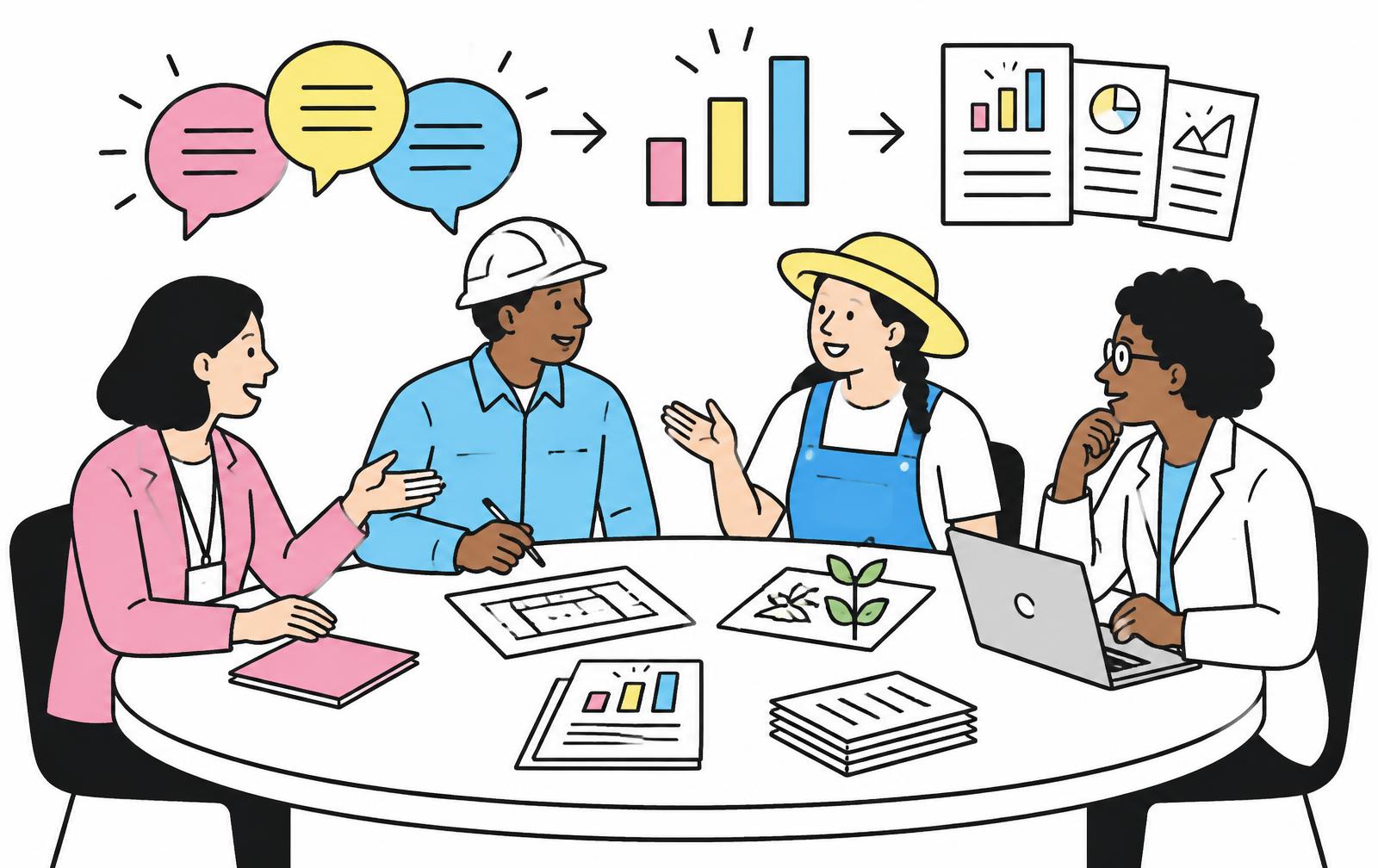
Our ambition is not just to facilitate conversations. It is to turn different perspectives into practical knowledge that can support better decisions. Over the coming months, we are developing several complementary initiatives.
dcently Sustainability Pulse
Our recurring industry intelligence initiative combines benchmark questions with emerging topics to understand how priorities, challenges and expectations evolve over time.
Municipalities and regions
Surveys and qualitative interviews with Swedish municipalities and regions: how local decision-makers view data centre development, and what makes an establishment desirable.
Understanding the water footprint
Exploring research into data centre water use and responsible water management — assessing impacts beyond conventional facility-level metrics.
A practical ESG Playbook
Connecting existing knowledge, identifying gaps and translating evidence into guidance that stakeholders can use in practice.
Rather than creating yet another isolated framework, our intention is to connect existing knowledge, identify gaps and translate evidence into guidance that can be used in practice.
From licence to grow to a reason to welcome
During TechEx, an interesting question emerged in our discussions: what makes a data centre genuinely useful to society? We believe this deserves much greater attention.
Digital infrastructure is essential to modern life. But its importance does not remove the responsibility to demonstrate how new developments fit into the communities and ecosystems where they operate.
Could a data centre contribute to more resilient local energy systems? Could excess heat become a useful resource? Could infrastructure investments create additional benefits for local businesses or communities? And importantly, how can those benefits be measured, shared and communicated transparently?
These questions do not have universal answers. They require collaboration, local understanding and a willingness to consider trade-offs. But they point towards an important shift.
From asking how the industry can secure permission to grow, to asking how it can become infrastructure that society actively values.
Join the conversation
Our first dcently meetup at TechEx Europe brought together around 30 participants for an open discussion about the challenges and opportunities facing the industry. We intend to keep building on that dialogue.
Our next meetup is planned for 3 December 2026 at Data Center Forum in Stockholm, where we look forward to continuing the conversation with stakeholders from across the ecosystem.
In the meantime, we invite operators, municipalities, suppliers, investors, researchers and other interested stakeholders to contribute to our ongoing work. Because defining what a decent data centre looks like shouldn't be left to any one organisation or industry segment.
It is something we need to build together.
Contribute to our research